
Reading Lead Sheets: A Beginner’s Guide

Piano Hands

Learning how to read lead sheets is a genuinely useful skill across almost every instrument. The information on a lead sheet is a simplified way of writing music that gives you the essentials without dictating every note.

What Is a Lead Sheet?

A lead sheet typically shows the melody, chord symbols, and lyrics (if there are any) of a song. It does not show a fully written-out arrangement for all instruments like a full score would. When you know how to read a lead sheet, it leaves room for you, the performer to interpret and build their own part around the given framework.

Why Lead Sheets Are So Useful

Unlike full notation or tab, a lead sheet is compact and flexible. The same lead sheet can be used by a guitarist, pianist, or bassist, each building their own part from the same chord and melody information.

Reading Chord Symbols

Chord symbols (like “Cmaj7” or “G7”) tell you the harmony at that point in the song. Different instruments interpret this information differently. A pianist might play a full chord, while a bassist focuses on the root note.

Following the Melody Line

The melody is usually written in standard notation above the chord symbols, giving you the tune even if you’re mainly focused on chords or accompaniment.

Practice Tips

Start with a simple, familiar song’s lead sheet before tackling something new. Recognising the melody by ear helps you connect what you’re reading to what you already know. Ask your teacher to work through a lead sheet with you in your next lesson.

Ready to Build This Skill Properly?

Reading lead sheets opens up a huge amount of musical flexibility. Book a free trial lesson with Jam Station Music in Nunawading, and explore our full range of instrument lessons.

How to Practice Effectively (Not Just Often)

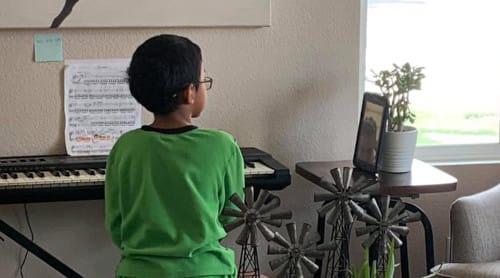
Piano Student

Knowing how to practice effectively matters far more than how long you practice. Many students assume more time automatically means more progress, but unfocused practice often reinforces the same mistakes rather than fixing them.

Quality Over Quantity

A focused 20 minute session, where you’re genuinely paying attention to what you’re doing, will almost always beat an hour of distracted, half-focused playing. Progress comes from deliberate attention, not just time spent.

Set a Specific Goal for Each Session

Rather than “practice guitar for 20 minutes,” try “get this chord change smooth” or “play this passage without stopping.” A specific goal gives your practice direction and makes it obvious when you’ve actually improved.

Isolate the Hard Parts

It’s tempting to always play through a full piece from the start, but the real gains come from identifying the one tricky section and repeating it slowly until it’s solid. Once that’s done, then try reconnecting it to the rest of the piece.

Slow Down More Than Feels Necessary

Almost every musician underestimates how slow they need to go to actually fix a problem spot. If you’re making the same mistake repeatedly, the answer is almost always to slow down further, not push through faster.

Practice Tips

Keep a simple practice log that has your musical goals identified and the amount of time you’ve spent practicing on each. Even just a note of what you worked on for each session is well worth the effort. In time, this will allow you to look back and see your genuine progress over weeks. Ask your teacher to help you set specific goals in your next lesson, whichever instrument you’re learning.

Ready to Build Better Practice Habits?

The right guidance makes practice time genuinely productive. Book a free trial lesson with Jam Station Music in Nunawading, and explore our full range of instrument lessons to find the right fit for you.

Building a Solid Practice Routine for Bass

Guitar-Bass-students

A well structured bass guitar practice routine makes far more difference than simply practicing for longer. A focused 20 minutes genuinely beats an unfocused hour.

Warm Up First

Start with a few minutes of simple finger exercises or scales before diving into songs. This warms up your hands and helps you notice any tension before it becomes a habit in more demanding material.

Split Your Time Into Sections

Rather than one long, unstructured session, split practice into focused blocks. A few minutes on technique, a few on a specific song section you’re finding tricky, and a few on general groove/timing work with a metronome.

Focus on Problem Spots, Not Just Full Run Throughs

Playing a whole song from start to finish feels satisfying, but it’s often less effective than isolating the one section you’re actually struggling with and repeating it slowly until it’s solid.

Use a Metronome Every Session

Timing / rhythm is the bassist’s core job in a band. This is why practicing with the metronome a non-negotiable part of every session, not just an occasional optional tool to use on a whim.

Practice Tips

Track what you practice in a simple log. It’s motivating to look back and see genuine progress over weeks. If you’re a current student, ask your teacher to help structure a routine suited to you in your next bass guitar lesson.

Ready to Learn Bass Guitar Properly?

A good routine turns practice time into real progress. Book a free trial bass guitar lesson with Jam Station Music in Nunawading, and Pat will help you build real skill and confidence.

Tips for Performing with Confidence

Vocals 3

Performing with confidence when singing is a skill in itself, separate from vocal technique. Like any skill, it genuinely improves with the right preparation and practice.

Nerves Are Normal (Even for Experienced Performers)

Almost every singer feels nervous before performing, no matter their experience level. The goal isn’t to eliminate nerves entirely, but to perform well despite them. This is a much more realistic and achievable target.

Preparation Builds Confidence

The single biggest factor in performance confidence is simply being genuinely well-prepared. Knowing your material solidly, including how to recover from a small mistake, removes much of the uncertainty that fuels nerves.

Practice Performing, Not Just Singing

Rehearsing alone in your room is different from performing in front of others. Practice performing for a small, low-pressure audience (a family member, a friend) before a bigger event. This builds a genuinely different kind of confidence than solo practice alone.

Simple Techniques for Managing Nerves

Slow, controlled breathing before stepping out reduces physical tension. Focusing on the meaning of the song, rather than worrying about being judged, also helps shift attention away from anxiety.

Practice Tips

Ask your teacher for a chance to “perform” in your next voice lesson rather than just practicing. This builds real performance experience in a supportive setting.

Ready to Learn Voice Properly?

Confidence is built through preparation and experience. Book a free trial voice lesson with Jam Station Music in Nunawading, and Pat will help you build both technique and genuine performance confidence.

Choosing Your First Drum Kit: A Beginner’s Guide

Drums Student 04

Choosing your first drum kit can feel overwhelming with so many options available on the market. With that in mind here’s what genuinely matters for a beginner, without overspending on features you won’t need yet.

Acoustic vs Electronic Kits

Acoustic kits offer a more authentic feel and sound, but are louder. This is a real consideration to keep in mind if you are living in shared or noise-sensitive home. Electronic kits are quieter. They can be played while using a set of headphones. They are also often more affordable as a starting point, making them a popular first choice for many beginners.

What to Look for in an Electronic Kit

For beginners, look for a kit with responsive, mesh (rather than rubber) heads, since mesh heads feel closer to an acoustic kit and produce less bounce-back noise. A basic 5-piece setup with a few cymbals is plenty to start.

What to Look for in an Acoustic Kit

A basic 5-piece acoustic kit with cymbals is sufficient for beginners. There’s no need for an elaborate, expensive setup early on. Focus on a stable, well-built kit over flashy extras.

Don’t Overspend Early On

It’s tempting to buy a premium kit right away, but a solid beginner or intermediate kit is genuinely sufficient for the first couple of years of learning. Eventually you’ll develop a much clearer sense of what you actually want as your playing progresses.

Practice Tips

If you’re unsure what to buy, ask your teacher before purchasing. A quick conversation in your next drum lesson can save you from an expensive mistake.

Ready to Learn Drums Properly?

Whichever kit you choose, structured lessons make the biggest difference to your progress. Book a free trial drum lesson with Jam Station Music in Nunawading, and Pat will help you build real skill behind the kit.

Simple Chord Progressions Every Pianist Should Know

Piano Student

Learning a handful of common piano chord progressions for beginners lets you play an enormous number of songs, since the same few sequences show up again and again across pop, folk, and rock music.

What Is a Chord Progression?

A chord progression is simply a sequence of chords played in a particular order, repeated throughout a song. Many popular songs share the same underlying progressions, which is why learning a few common ones goes such a long way.

The I-IV-V Progression

Built from the 1st, 4th, and 5th notes of a scale, this progression is one of the most common in Western music. In the key of C Major the 1st, 4th, and 5th notes are C, F, and G. This chord progression appears constantly across many genres and is a great first progression to learn.

The I-V-vi-IV Progression

This chord progression is sometimes called the “Pop progression”. This sequence of chords in the key of C Major: is C, G, Am, F. The “Pop” chord progression shows up in an enormous number of well-known songs. Learning to recognise and play it gives you access to a huge amount of popular repertoire.

Practicing Smooth Transitions

As with guitar chords, the real skill is moving smoothly between chords, not just knowing the shapes individually. Practice each transition slowly, checking your hand position each time before building speed.

Practice Tips

Try playing a progression along with a simple, steady rhythm before adding any melody on top . Aim to lock in the chords with the beat first. This makes practicing fun, challenging and musical. If you’re a current student, ask your teacher to show you these progressions in your next piano lesson.

Ready to Learn Piano Properly?

A handful of progressions unlocks a huge amount of music. Book a free trial piano lesson with Jam Station Music in Nunawading, and Pat will help you build real, practical skills.

Understanding Guitar Scales: Where to Start

Guitar Lessons in Nunawading

Once you’re comfortable with chords, learning guitar scales for beginners is the natural next step. Scales are the foundation of melody writing, soloing, improvisation, and understanding why certain notes sound “right” over a given chord.

What Is a Scale?

A scale is simply a set sequence of single notes played in order, up or down, that follows a particular pattern of musical steps. Interestingly, the use of different scales, allows the composer to create different moods in the composition. Certain genres tend to favour certain scales as it allows the writer to create their songs in a particular feel or mood. However almost every beginner starts in the same place.

Your Starting Point, The Minor Pentatonic Scale

The minor pentatonic scale is the most common starting point for beginner guitarists, largely because it’s forgiving. Almost every note in this scale sounds good over a wide range of chords, making it hard to play a genuinely “wrong” note while improvising.

Learning One Shape First

Rather than trying to learn scales across the whole fretboard at once, focus on a single, moveable shape first. Once that shape feels comfortable, you can shift it up and down the neck to play the same scale in different keys. This is a huge shortcut once it clicks.

Connecting Scales to What You Already Know

Try playing a scale shape over a chord you already know well. Then notice how certain notes sound particularly strong or “resolved” against that chord. This is the beginning of understanding melody and improvisation, not just memorising shapes.

Practice Tips

Practice scales slowly with a metronome before worrying about speed. The clean, even playing matters far more than fast playing early on. If you’re a current student, ask your teacher to show you your first scale shape in your next guitar lesson. For a visual reference, Fender’s online scale charts are a helpful free resource.

Ready to Learn Guitar Properly?

Scales open the door to soloing and real musical expression. Book a free trial guitar lesson with Jam Station Music in Nunawading, and Pat will help you build real technique from the ground up.

Bass vs Guitar: Key Differences for Beginners

Students playing guitars

If you’re deciding between the two, understanding the real bass vs guitar differences helps clarify which instrument actually suits your musical interests and role in a band.

Different Roles in a Band

Guitar typically carries melody, chords, and harmony. Bass provides the rhythmic and harmonic foundation. In a band ensemble, Bass locks in with the drums to hold the song together. In a song, both drums and bass parts are essential, but they serve genuinely different musical functions.

Fewer Strings, Different Technique

Bass guitars typically have four strings (versus guitar’s six), tuned an octave lower. This means less emphasis on chords and more focus on single-note lines, rhythm, and groove. So a different technical skill set is required for the bass as compared to the guitar’s role of playing chords / single note melodies.

Which Suits Which Personality?

Guitarists are often drawn to melody, solos, and being musically “out front.” Bassists often enjoy driving the groove and locking in tightly with the drummer. It’s a more foundational, team-oriented role that some players find more musically satisfying.

Can You Play Both?

Absolutely. In fact many musicians play both, and skills genuinely transfer between them (fretboard knowledge, chord theory). Starting with one doesn’t close the door on the other later.

Practice Tips

If you’re unsure which suits you, try both if possible before committing. The physical feel and musical role are different enough that hands-on experience is the best guide. If you’re a current student, this is worth discussing in your next bass guitar lesson.

Ready to Learn Bass Guitar Properly?

Whichever instrument calls to you, structured lessons make the learning curve far smoother. Book a free trial bass guitar lesson with Jam Station Music in Nunawading, and Pat will help you build real skill and groove.

Understanding Vocal Range: Finding Your Voice Type

Understanding vocal range helps you choose songs that genuinely suit your voice, rather than constantly fighting material that sits outside your comfortable range.

What Is Vocal Range?

Your vocal range is simply the span of notes you can comfortably sing, from your lowest to your highest. It’s unique to every singer and can develop and extend somewhat with proper training over time.

Common Voice Types

Broadly, voices are categorised as soprano, alto, tenor, or bass, though many singers sit somewhere between these broad categories (mezzo-soprano and baritone are common in-between classifications). These categories describe typical range and tone, not a rigid box you’re locked into.

Why Your Voice Type Isn’t Fixed Forever

Especially for younger singers, voice type can shift as the voice matures. This is completely normal, and it’s one reason working with a teacher rather than self diagnosing is genuinely valuable.

Finding Your Comfortable Range

Rather than pushing for the highest or lowest note you can technically hit, focus on where your voice feels genuinely comfortable and controlled across a sustained passage. That’s a much more useful indicator of your natural range than an isolated extreme note.

Practice Tips

Avoid forcing notes outside your comfortable range regularly, since this can strain your voice over time. If you’re a current student, ask your teacher to help map your range properly in your next voice lesson. It’s genuinely useful for choosing repertoire that suits you.

Ready to Learn Voice Properly?

Understanding your voice is the first step to singing with real confidence. Book a free trial voice lesson with Jam Station Music in Nunawading, and Pat will help you discover what your voice does best.

Building Timing and Groove: Practice Tips for Drummers

Building timing and groove is what separates a drummer who plays the right notes from one who actually makes a song feel good. It’s a skill that develops through deliberate, focused practice, not just playing more.

Timing vs Groove — What’s the Difference?

Timing is playing accurately in relation to the beat. Groove is the feel you bring to that timing. It’s the subtle variations in dynamics and phrasing that make a beat sound musical rather than mechanical. You need solid timing first before groove can develop naturally.

Practice With a Metronome (Properly)

Most drummers use a metronome, but few use it effectively. Try setting it to click only on beat one of each bar, rather than every beat. This forces you to internalise the timing between clicks rather than relying on constant external reference.

Play Along to Real Music

Practicing against a metronome builds precision, but playing along to actual songs builds feel. Choose songs with a clear, steady groove and focus on locking in with the original drummer’s timing and dynamics.

Record Yourself

It’s often surprising how different your playing sounds on recording compared to how it feels in the moment. Recording short practice clips and listening back honestly is one of the fastest ways to identify timing issues you can’t hear while playing.

Practice Tips

Spend focused practice time on timing before worrying about complex fills or patterns. Grooves are built on a foundation of consistent timing. If you’re a current student, ask your teacher to record you in your next drum lesson so you can hear your own timing objectively.

Ready to Learn Drums Properly?

Great timing and groove take real practice, but they’re absolutely learnable skills. Book a free trial drum lesson with Jam Station Music in Nunawading, and Pat will help you build a genuinely musical foundation.